Mollusk bench for the guest lounge at the Lindis
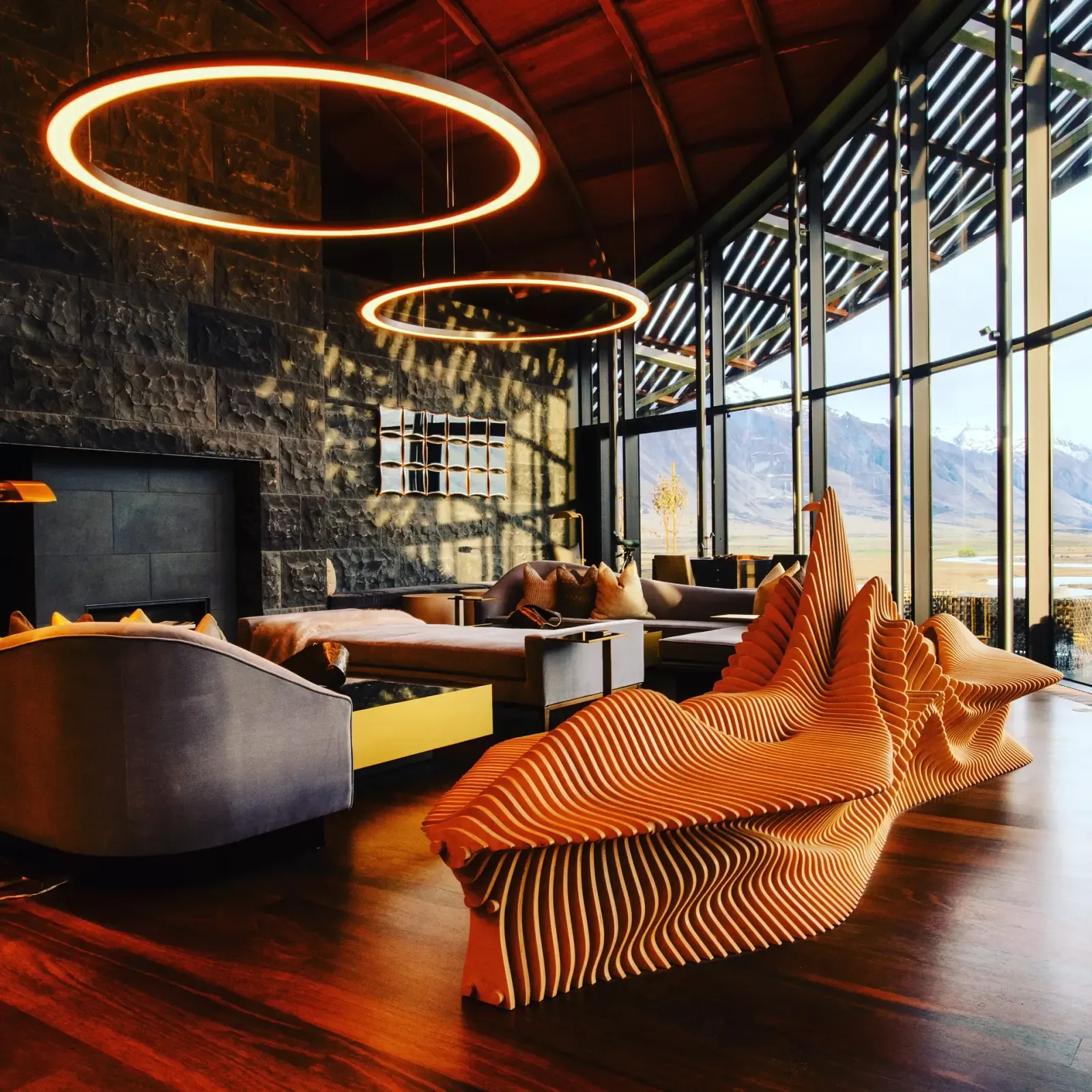
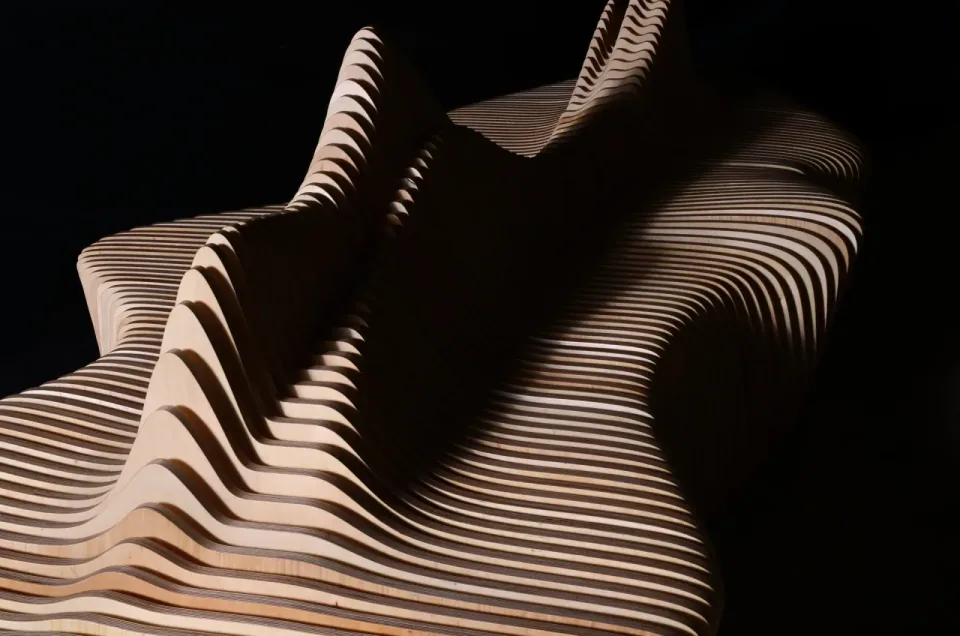
The Mollusk bench created for the guest lounge at The Lindis is one of those rare furniture pieces that feels inseparable from the place where it lives. The lodge is set in New Zealand's Ahuriri Valley in North Otago, surrounded by open land, mountain lines and a wide, quiet horizon. In this context, a conventional lounge object would have felt too domestic, too separate from the architecture and the landscape. Mollusk works differently. Its low, flowing profile seems to continue the movement of the valley inside the room, translating the softness of hills, riverbeds and natural erosion into a sculptural wooden form.
The project received international editorial attention when it appeared in Vogue Australia in April 2020, in the Vogue Voyage feature "Treading lightly" about sustainable travel in New Zealand. The article presented The Lindis as part of a wider story about environmentally conscious tourism, remote landscapes and hospitality shaped by a lighter relationship with nature. Within that visual narrative, the guest lounge image with the Mollusk bench was especially important: it showed the object not as isolated product design, but as part of an architectural atmosphere. The bench sits in a room of stone, timber, glass and panoramic mountain views, becoming a quiet sculptural anchor in a space already defined by strong natural presence.
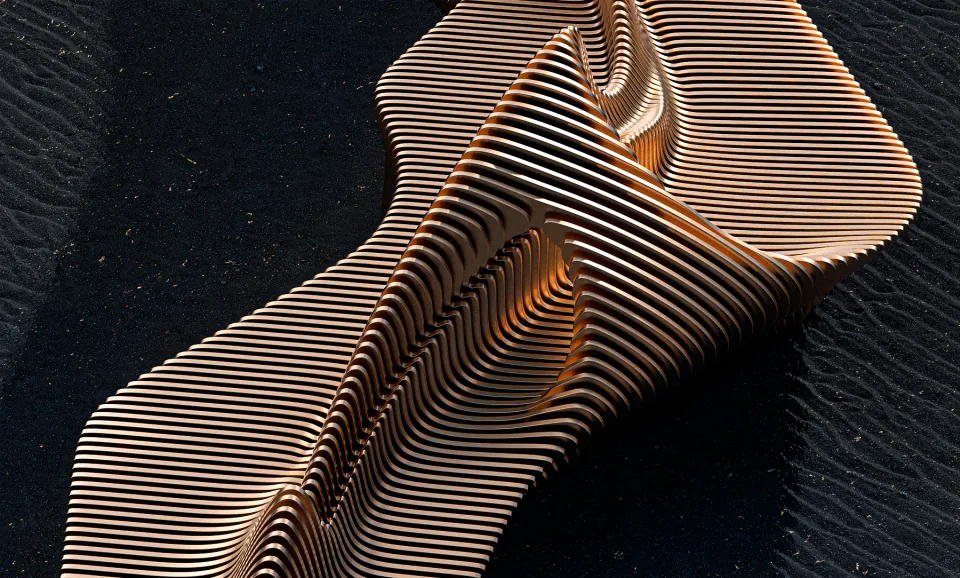
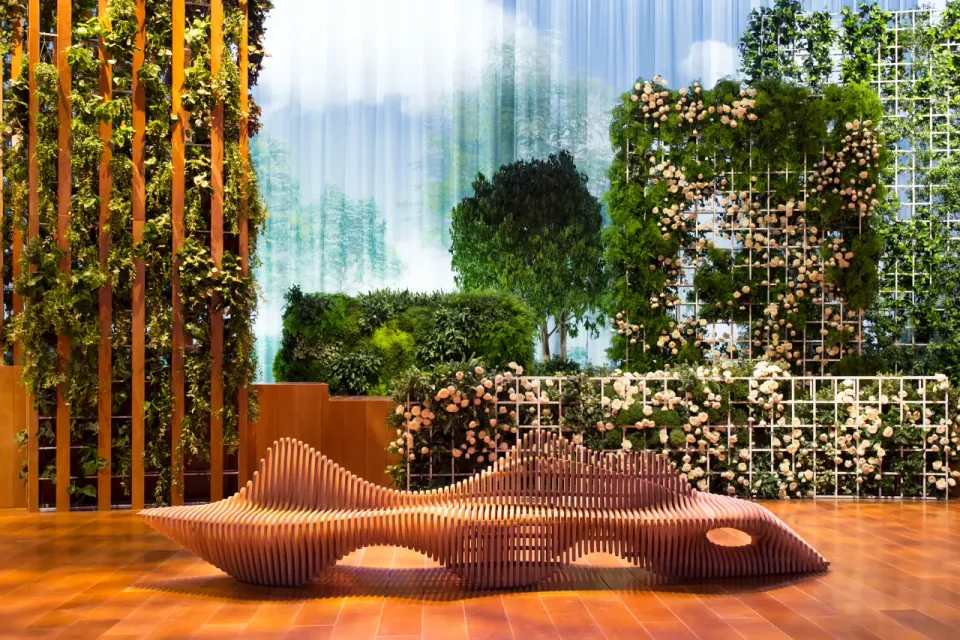
The form of Mollusk is built from a sequence of precise wooden ribs. Each rib is different, and together they create a continuous surface that rises, folds and opens like a shell. The name feels accurate because the object has the quality of something found rather than forced: layered, organic, protective and tactile. At the same time, the geometry is not decorative in a traditional sense. It is parametric and controlled, with every line contributing to ergonomics, rhythm and silhouette. This balance between natural association and digital precision is what gives the bench its architectural value.
In the guest lounge, Mollusk does not compete with the view. It lowers the scale of the room and gives guests a human point of contact within a large landscape-driven interior. The repeated ribs catch warm light from the space, producing fine shadows that echo the texture of timber ceilings and natural materials around it. From one side, the bench reads as a smooth reclining wave; from another, it becomes a dense graphic field of vertical lines. This changing perception makes the object feel alive as people move through the lounge.
For architects and hospitality designers, the project is a strong example of furniture as part of the site narrative. The Lindis is not a project where an art object can be placed without consequence; every element has to support the feeling of retreat, silence and immersion in the landscape. Mollusk contributes to that by offering comfort without visual heaviness and sculpture without theatrical excess. It creates a memorable focus, but it remains calm enough for a luxury lodge environment.
The same Mollusk bench model was also presented by After-Form at SaloneSatellite 2019 in Milan, where it appeared alongside the studio's light sculptures. That exhibition context adds another layer to the project: Mollusk is not only a bespoke object for a remote New Zealand lodge, but also a design piece that has travelled internationally and been shown within one of the world's most important design platforms. The movement from SaloneSatellite in Milan to The Lindis in Ahuriri Valley shows the flexibility of the model. It can stand as an independent collectible design object, yet it can also become deeply integrated into a specific architectural interior.
For developers, hotel owners and designers, this is the key value of the project. Mollusk creates more than a seating area. It gives a lounge a signature image, a press-worthy detail and a spatial memory that guests can associate with the place. Its form is refined enough for a luxury hospitality project, expressive enough for international design media and practical enough to function as real furniture. At The Lindis, the bench becomes a meeting point between landscape, architecture, craft and contemporary parametric design.