After-Form is a computational design studio creating custom parametric furniture, sculptural benches, wall panels, lighting, reception desks, 3D printed objects, and architectural features for commercial interiors, public spaces, hotels, offices, schools, galleries, airports, retail environments, and private projects. The studio works at the intersection of parametric design, digital fabrication, architecture, furniture design, and contemporary art, turning algorithmic form studies into physical objects with a strong sculptural presence.
The concept of After-Form is based on the idea that form can exist between natural systems, human perception, and digital generation. It is not simply an image, a decorative surface, or a finished shape copied from nature. It is a transitional state: a form created through rules, movement, rhythm, transformation, and self-organization. This approach allows the studio to create objects that feel organic and alive, while still being precise, buildable, and adapted to real architectural spaces.
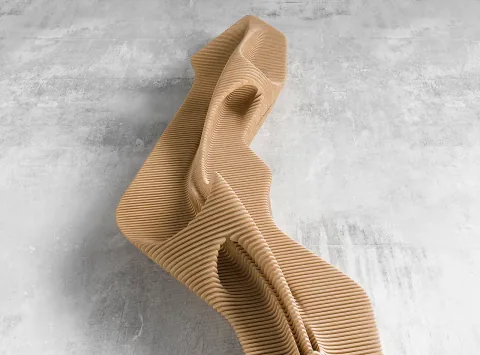
After-Form works with computational tools, procedural modeling, CNC fabrication, 3D printing, material testing, assembly systems, and hand finishing. Each project begins with a digital form logic: curves, sections, surfaces, density, ergonomics, light, structure, and the way people move around the object. This digital system is then translated into material through plywood ribs, metal rods, printed structures, cast surfaces, lighting elements, or custom production details. The result is furniture and architectural design that can function as seating, wall architecture, light sculpture, reception furniture, public art, or collectible design.
The studio is known for its parametric furniture collection, including Murena Bench, Mollusk Bench, Mebius Bench, L Bench, S Bench, Falcon Bench, Scate Chair, and other sculptural plywood objects. These works combine practical use with a strong visual identity: they are benches, chairs, desks, and interior objects, but also sculptural objects that define the atmosphere of a room. Many pieces are made from CNC-cut plywood sections assembled into flowing volumes, creating a recognizable language of rhythm, shadow, movement, and tactile surface.
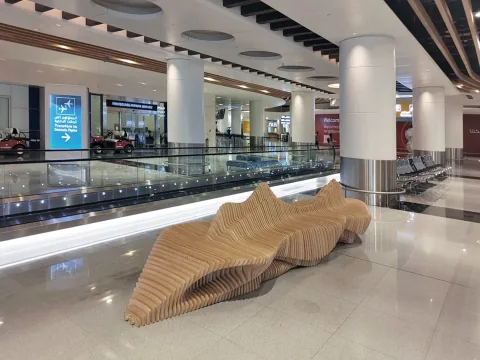
After-Form projects have been installed in a wide range of international contexts. The studio has created 65 Murena benches for Muscat International Airport in Oman, parametric furniture for Mapletree Business City in Singapore, benches for New Arbat Street in Moscow, furniture for Olympic Park in Sochi, 30 benches for Sahara Mall in Riyadh, a Dubai Design District reception desk, a Murena bench for Jewel Changi Airport in Singapore, and a Mollusk bench for the guest lounge at The Lindis in New Zealand. Other key projects include Explorium in Dublin, Parametric Bench Bahrain in Bahrain Bay, Black Mumba in Australia, Qessence in Moscow, and IBM: THINK. Art with Watson.
The studio has also participated in major design and art contexts. After-Form works were shown at Salone Satellite during Salone del Mobile Milano 2019, Paris Design Week 2019 with 1000 Vases, Florence Biennale 2019 with Jupiter light sculptures and panels, and The One Show / Ogilvy / IBM context connected with Art with Watson. These exhibitions and collaborations place the studio between collectible design, computational art, commercial interiors, and experimental fabrication.
After-Form has been featured in international design, architecture, art, and technology publications. The studio and Oleg Soroko’s work have appeared in DesignWanted, Parametric Architecture, Fubiz, IGNANT, Scale Magazine, L’Officiel Australia, We and the Color, Contemporist, Toxel, Visualflood, Design You Trust, Fahrenheit Magazine, Medium, ReJigIt, Formakers, Art & Design Inspiration, Muuuz, Blog Esprit Design, The One Show, Ogilvy, TEDx, and other platforms. The work has also appeared in research and academic contexts, including publications about parametric furniture design, digital fabrication, material-fabrication-design methods, and computational approaches in architecture and interior design.
Today After-Form develops both custom commissions and existing object collections. Architects, interior designers, developers, hospitality clients, schools, offices, airports, galleries, collectors, and private clients can work with the studio to adapt an existing object or create a new piece for a specific site. Dimensions, materials, finish, installation logic, transport, assembly, lighting conditions, and the visual role of the object are developed around each project. At its core, After-Form creates objects that make a space memorable. A bench becomes a landmark. A reception desk becomes an architectural gesture. A wall panel becomes a relief surface. A light becomes a sculpture. A digital algorithm becomes a physical object that people can sit on, touch, walk around, photograph, and remember. The studio’s goal is to bring computational design into real interiors and public environments through furniture, lighting, panels, and sculptural objects that combine function, technology, craft, and artistic identity.