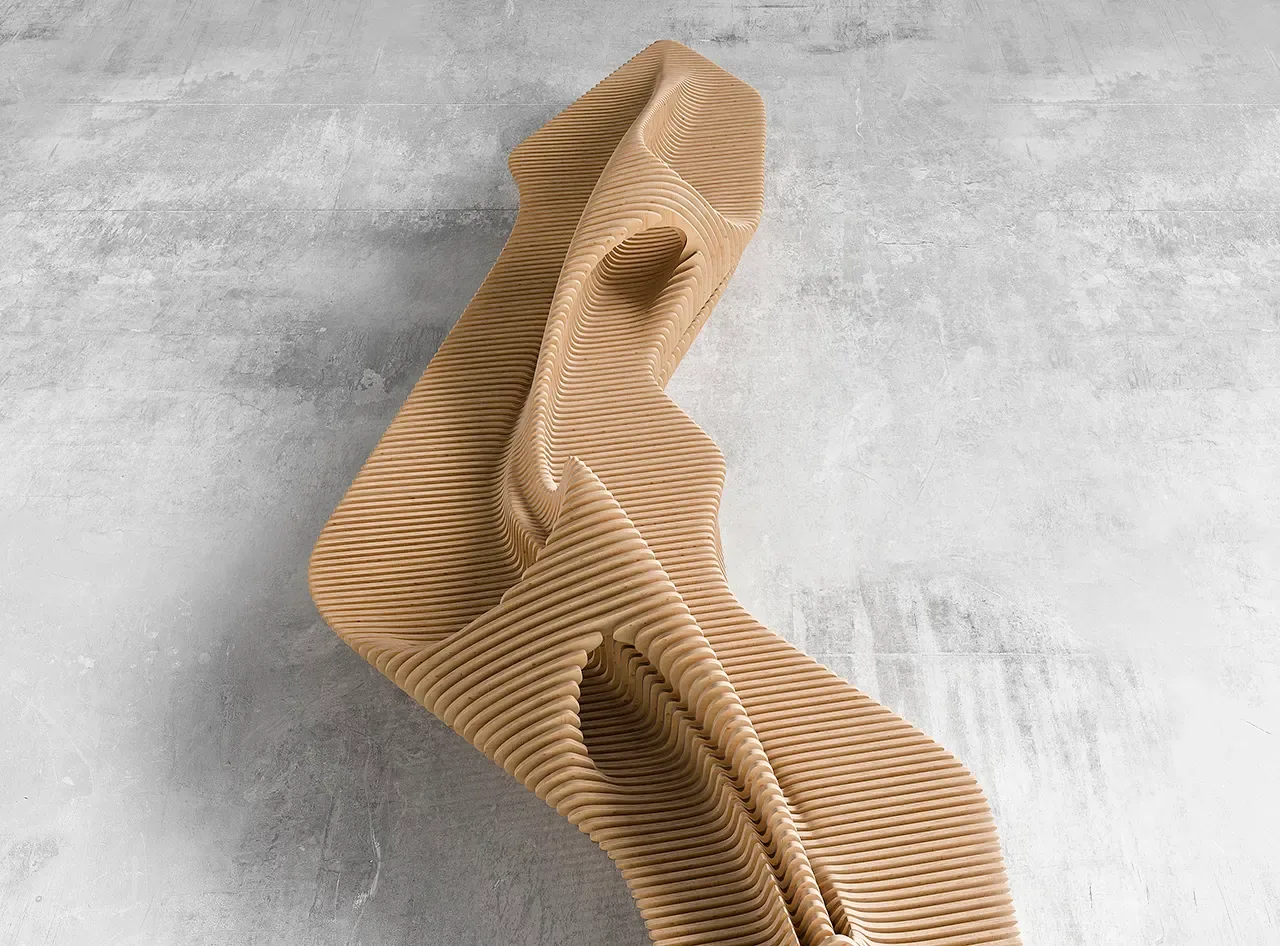
Parametric furniture is created through a digital model in which related design decisions can be controlled together. Instead of drawing one final shape and treating it as fixed, the designer builds a system connecting dimensions, curves, sections, repetition, ergonomics, structure and production limits.
This does not mean that every parametric object must look futuristic or complex. The practical value is adaptability. A bench can become longer, change direction or provide a different number of seats while retaining one coherent design language. A reception desk can respond to a floor plan, accessible counter height, equipment, storage and staff workflow.
After-Form often translates these systems into layered plywood sections produced with CNC cutting, but the method can also inform panels, printed structures, metal elements and mixed-material objects. Material thickness, connections, surface protection, assembly and maintenance remain part of the design rather than being solved after the form is complete.
For architects and project teams, parametric design is most useful when it connects visual identity with measurable project requirements. Plans, quantities, materials, delivery access and installation conditions can be reviewed within the same controlled process, from the first brief to the finished object.